Something is shifting in how people play games. Millions of players are stepping away from high-intensity shooters and competitive arenas, choosing instead to wander through virtual forests, tend digital farms, or photograph pixelated wildlife at their own pace.
This isn’t a casual trend: there’s real psychology behind why peaceful adventure games feel so deeply satisfying, and understanding it tells us something important about how we use digital experiences to take care of our minds.
What Makes a Game Peaceful, and Why That Question Matters
Peaceful adventure games are exploration-focused, low-stakes digital experiences where players move through a world without mandatory combat, failure pressure, or time limits. Think of titles like Journey, where you glide across desert dunes toward a distant mountain, or Alba: A Wildlife Adventure, where you photograph birds and clean up a nature reserve. Stardew Valley fits here too: farming, fishing, and building friendships at whatever pace you choose.
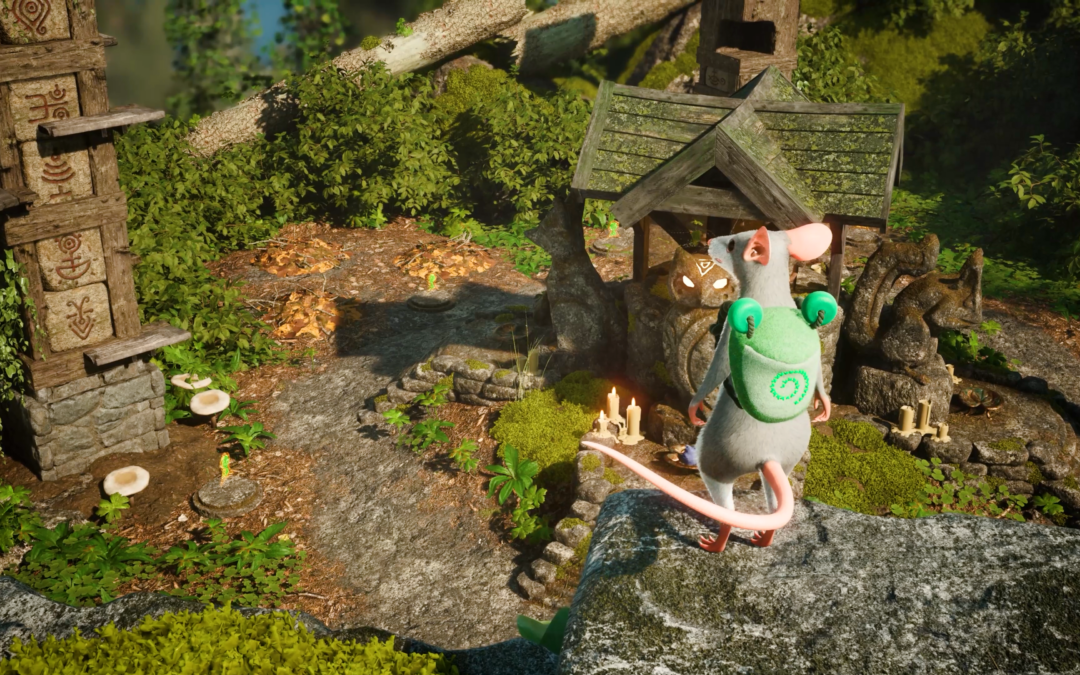
Hela: Of Mice & Magic sits comfortably in this same space. Steam lists it under the “Relaxing” tag, and its own marketing describes a wholesome open-world adventure focused on exploration and puzzle-solving that offers players a calm and immersive experience. The world is built to be explored at your own pace, with no waypoint pulling you toward a fixed objective.
This genre differs from puzzle games, which center on problem-solving challenges, and idle games, which run largely on their own. Peaceful adventure games ask you to be present and curious. They reward exploration, not performance.
Why does this distinction matter beyond personal preference? Because the choices people make about digital experiences reflect something real about their mental needs. When millions of players independently gravitate toward calmer games, that’s a signal worth paying attention to, and science gives us tools to understand what’s actually happening.
The Science of Calm: How Peaceful Games Affect the Brain
Cognitive Escapism and Why It Works
Researchers use the term cognitive escapism to describe the deliberate use of immersive environments to mentally disengage from daily stressors. This isn’t avoidance in a harmful sense, it’s closer to the mental equivalent of taking a long walk. A 2024 study published in peer-reviewed literature examined open-world games and found that players reported meaningful improvements in well-being and stress reduction after sessions in low-threat game environments. The key word is “low-threat.” When your brain isn’t scanning for danger, it can actually rest.
How the Brain Downregulates Stress
Here’s the sequence of what happens neurologically when you enter a peaceful game world:
- You enter a low-threat environment with no enemies, no timers, and no penalty for wandering.
- The amygdala, the brain region that processes threat and triggers stress responses, reduces its activity because there’s nothing to defend against.
- Cortisol levels, the body’s primary stress hormone, begin to drop as the perceived pressure decreases.
- The default mode network, a brain system active during rest, reflection, and creative thinking, becomes more engaged.
- Dopamine, the neurotransmitter tied to reward and motivation, releases steadily as you discover new areas or complete gentle tasks, without the sharp spikes and crashes of high-stimulation games.
This steady, gentle reward pattern is part of what makes chill games feel genuinely restorative rather than just entertaining.
Attention Restoration Theory in a Virtual World
Psychologists Rachel and Stephen Kaplan developed Attention Restoration Theory to explain why natural environments help people recover from mental fatigue. Their research found that calm, visually rich settings, think forests, open water, rolling hills, replenish directed attention, the focused mental effort we use for work, decisions, and problem-solving. Peaceful adventure games appear to trigger similar responses, even though the environments are virtual. Your brain responds to the aesthetic of calm, not just its physical reality.
Design Elements That Create a Genuinely Chill Experience
Sound, Pacing, and Visual Beauty
Game designers working in this genre make very deliberate choices. Ambient soundscapes, birdsong, wind, gentle water, activate relaxation responses in ways that silence or loud music don’t. Slow pacing gives players time to absorb their surroundings rather than react to threats. Visual beauty, particularly lush scenery and warm color palettes, triggers positive emotional responses tied to safety and comfort.
Hela’s Northern Sweden-inspired forests, meadows, and wetlands give it exactly this kind of backdrop, handcrafted at a scale where even a fifty-meter waypoint feels like a real journey for a mouse.
The absence of failure states deserves special attention. When you can’t “lose,” your nervous system stops bracing for negative outcomes. That shift is psychologically significant. It’s not just a design choice: it removes a constant low-level stressor that most games quietly impose.
Player Agency and the Autonomy Effect
Peaceful adventure games give you genuine choice about where to go and what to do. Psychological research on self-determination theory tells us that autonomy, feeling in control of your own actions, is one of the core drivers of well-being. When a game says “go anywhere, do anything, there’s no wrong answer,” it satisfies a deep human need. That sense of agency feels restorative precisely because so much of daily life doesn’t offer it.
Hela leans on this directly. Progression doesn’t work like checking boxes on a list, it works more like living a life in the village, so finding a secret tunnel behind a bookshelf or a path through a hollow log feels like your own discovery rather than a scripted reward.
Who Is Playing Peaceful Adventure Games, and Why Now?
The audience for cozy games has expanded well beyond casual players. Experienced gamers who spent years in competitive environments are actively seeking balance. Parents play with young children. People managing anxiety find low-pressure environments genuinely therapeutic. Research on ADHD and gaming suggests that low-stimulation, open-ended game environments may help some players with attention difficulties engage more comfortably than high-speed, high-stakes alternatives, because the cognitive load stays manageable and the pacing is self-directed.
The cultural timing matters too. Burnout has become a widely recognized phenomenon, and digital overload, the exhaustion of being constantly connected, constantly reactive, is something many people feel but struggle to name. Peaceful adventure games offer a form of digital mindfulness: an intentional choice to use technology in a way that restores rather than depletes attention. The growth of cozy gaming communities online, where players share screenshots of sunsets in virtual worlds and swap tips for finding hidden fishing spots, signals that this is about more than just games. It’s about a shared value around how we want digital experiences to make us feel.
Cognitive Escapism: Healthy Retreat or Avoidance?
This is a fair question, and the answer matters. Cognitive escapism becomes problematic when it replaces real-world coping, relationships, or responsibilities over long periods. But research distinguishes between restorative escapism and problematic escapism using a clear criterion: does the activity leave you better equipped to engage with your life, or does it leave you more disconnected from it?
Peaceful games tend to support restorative escapism. Sessions feel complete. Players return to their day with reduced stress and improved mood rather than feeling compelled to keep playing at the cost of everything else. High-stimulation games with reward loops designed to maximize session length don’t always share that quality.
Think of intentional game choices as part of a broader digital well-being toolkit, the same way you might choose a walk over doom-scrolling, or a podcast over cable news. The medium isn’t the whole story. How you use it, and what it does to your mental state afterward, is what counts.
Peaceful Games as a Window Into How We Learn and Explore
There’s a genuine parallel between peaceful adventure games and how scientific inquiry works. In both, you observe an environment, notice what’s interesting, follow curiosity without a fixed outcome, and build understanding through exploration rather than instruction. Open-world exploration in games mirrors the kind of intrinsic motivation, doing something because it’s genuinely interesting, not because you’re being graded, that learning researchers identify as the most durable form of engagement.
Game designers are increasingly drawing on psychology and neuroscience to shape player experience. The best peaceful games aren’t peaceful by accident: they’re engineered to produce specific emotional and cognitive states. That makes them legitimate subjects of scientific inquiry, not just entertainment. The boundary between play and learning has always been more porous than we assume.
What the Peaceful Gaming Trend Tells Us About Digital Well-Being
The popularity of peaceful adventure games is one data point in a larger story about how people are becoming more deliberate about their digital habits. The field of digital well-being research, which examines how technology design affects mental health, attention, and quality of life, is growing rapidly, and the questions it asks are ones many of us are already living. Which digital experiences leave us feeling restored? Which ones leave us depleted? How do we choose intentionally rather than just reactively?
Players choosing cozy games over competitive ones are making an implicit judgment about what they want technology to do for them. That’s a form of digital literacy in action.
Where Peaceful Adventure Games Are Headed
The genre is expanding in directions that connect directly to science and education. VR exploration games place players inside photorealistic natural environments, with early research suggesting therapeutic applications for anxiety and stress recovery. Procedurally generated natural worlds, environments created by algorithms that produce unique landscapes every time, mean players can explore endlessly without repetition. Researchers and educators are beginning to examine whether peaceful game environments might support learning, focus training, or emotional regulation in clinical and classroom settings.
This is a genre that started as a quiet alternative to mainstream gaming and is becoming a serious subject of psychological and neurological inquiry. If you’re drawn to these games, you’re participating in something worth understanding, and there’s a lot more science to explore at the intersection of play, well-being, and digital experience.
Frequently Asked Questions About Peaceful Adventure Games
Are peaceful games good for mental health?
Research suggests they can be. Low-threat game environments appear to reduce cortisol levels and support cognitive restoration. The key is using them as part of a balanced approach to well-being rather than as a substitute for other forms of self-care.
What makes a game genuinely relaxing to play?
Relaxing games tend to combine open exploration, ambient sound design, no failure states, and player autonomy. The absence of time pressure and the presence of visual beauty both play measurable roles in triggering calm psychological states.
Do cozy games reduce stress?
Studies on open-world and low-stakes gaming indicate that players report reduced stress and improved mood after sessions. The neurological mechanism involves reduced amygdala activity and steadier dopamine release compared to high-stimulation game types.
Are peaceful adventure games good for people with ADHD?
Some research suggests that self-directed, low-pressure game environments may be easier for people with ADHD to engage with comfortably. The ability to set your own pace and choose your own focus reduces the cognitive overload that high-speed games can create.

Logan Bessant is a dedicated science educator and the founder of Science Resource Online, launched in 2020. With a background in science education and a passion for accessible learning, Logan has built a platform that offers free, high-quality educational resources to learners of all ages and backgrounds.